Are you looking to buy or sell a home in the St. Louis metropolitan area? Look no further! According to recent data, the fastest selling zip code in the area is 62084 in Madison-IL, IL. With an average of only 3 days on the market, homes in this zip code are in high demand. And with an average list price of $187,375, sellers can expect to get top dollar for their properties.
But that’s not all. The second and third fastest selling districts in the St. Louis metro area are also located in Madison-IL, IL and St Clair-IL, IL, respectively. These areas have an average of 6 and 12 days on the market, making them hot spots for both buyers and sellers. So, whether you’re a family looking for a new home or an investor searching for a lucrative opportunity, these zip codes are worth considering.
To see the complete list of the fastest selling zip codes in the St. Louis metro area, be sure to check out MORE, REALTORS®. With their expertise and knowledge of the local market, they can help you find the perfect home or sell your property quickly and efficiently. Don’t miss out on these hot zip codes – start your search with MORE, REALTORS® today!
Attention all home buyers and sellers in the St. Louis metropolitan area! Are you looking for a quick and seamless real estate experience? Look no further than the top three fastest selling school districts in the region. According to recent data, Freeburg DIST 70 in Illinois takes the top spot with an impressive average of only 12 days on the market for its two active listings, with an average list price of $344,000. Coming in at a close second is Windsor C-1 in Unincorporated, MO, with six listings and an average of just 15 days on the market. And rounding out the top three is Dupo DIST 196 in Illinois, with five listings and an average of 18 days on the market.
For those looking to buy or sell a home in these areas, this is great news. The fast pace of these school districts means that homes are in high demand and are selling at a quick rate. And for families, this is a great opportunity to find a home in a top-performing school district. For a complete list of the fastest selling school districts in the St. Louis metropolitan area, be sure to check out MORE, REALTORS®. Don’t miss out on your chance to be a part of these thriving communities. Start your home search or listing process today!
The real estate market in the metro east area is showing no signs of slowing down. According to the latest data from MORE, REALTORS®, homes in the metro east update sold for a median price of $183,711 during April 2024. This represents a 5.58% increase from April 2023, when the median sold price was $174,000.
However, there was a slight decrease of 0.40% compared to March 2024, when the median sold price was $184,450. The median list price also saw a significant increase, rising by 8.79% from $170,000 in April 2023 to $184,950 in April 2024.
The number of home sales in the metro east update also saw a significant increase, with 626 homes sold in April 2024 compared to 510 in April 2023. This represents a 22.75% increase, indicating a strong demand for homes in the area.
As the chart below, available exclusively from MORE, REALTORS®, illustrates, the metro east real estate market continues to be a hot market for both buyers and sellers. With rising home prices and a high number of sales, it’s a great time to be a part of the metro east real estate market.
If you’re considering buying or selling a home in the metro east area, don’t hesitate to contact MORE, REALTORS® for expert guidance and assistance. Our team of experienced real estate agents will help you navigate the market and make the most informed decisions. Stay tuned for more updates on the metro east real estate market.
The real estate market in St Charles County, MO continues to show strength and stability as we head into the summer months. According to the latest data available exclusively from MORE, REALTORS®, the median sold price for homes in the St Charles County update was $360,000 in April 2024. This represents a 2.06% increase from April 2023, when the median sold price was $352,750.
While there was a slight decrease of 2.82% from the previous month, when the median sold price was $370,450, the overall trend for home prices in St Charles County remains positive. Additionally, the median list price for homes in April 2024 was $350,000, which is the same as it was in April 2023.
The number of home sales in St Charles County also saw an increase, with 365 homes sold in April 2024. This is a 4.89% increase from April 2023, when there were 348 home sales.
As the market continues to show stability and growth, now is a great time to buy or sell a home in St Charles County. Contact MORE, REALTORS® for expert guidance and assistance with all of your real estate needs.
The latest data from the Franklin County update shows a continued upward trend in the real estate market. In April 2024, the median sold price for homes in the county was $245,450, representing a 5.34% increase from the same month last year. This also marks a slight decrease of 0.63% from March 2024.
The median list price for homes in Franklin County was $246,450, a 6.02% increase from April 2023. In terms of sales, there were 108 homes sold in April 2024, a significant 54.29% increase from April 2023.
For a visual representation of this data, refer to the chart below, available exclusively from MORE, REALTORS®. This data indicates a strong and active real estate market in Franklin County, making it a desirable location for both buyers and sellers. Stay tuned for more updates on the Franklin County real estate market.
As of April 2024, the St. Louis metro area real estate market continues to show steady growth. According to data from MORE, REALTORS®, the median sold price for homes in the St. Louis area was $260,000, representing a 2.36% increase from April 2023 when the median sold price was $254,000. This also marks a 4.00% increase from the previous month, March 2024, when the median sold price was $250,000.
The median list price for homes in St. Louis was $250,000, a slight 0.04% increase from April 2023. This indicates that sellers are still able to command a strong price for their homes in the current market.
In terms of sales, there were 2,634 home sales in the St. Louis metro area in April 2024, a 9.70% increase from April 2023. This shows a continued high demand for homes in the area.
For those looking to buy or sell a home in the St. Louis metro area, now is a great time to take advantage of the strong market conditions. With the help of a knowledgeable and experienced REALTOR from MORE, REALTORS®, buyers and sellers can navigate this competitive market with confidence. Stay tuned for more updates on the St. Louis real estate market.
Lawrence Yun, Chief Economist for the National Association of REALTORS
In his forecast yesterday at the 2024 REALTORS® Legislative Meetings, National Association of Realtors® Chief Economist Lawrence Yun delivered a promising outlook for the real estate market with expectations for rising existing-home sales. According to Yun, the U.S. is likely to see existing-home sales increase to 4.46 million in 2024, a 9% rise from 2023, and surge to 5.05 million in 2025. Yun highlighted, “More jobs mean more home sales and higher housing demand. You need a strong local economy for a strong housing market.”
Additionally, Yun noted a significant calming in rental markets, which will help stabilize the consumer price index, encouraging the Federal Reserve to consider lowering interest rates. He remarked, “The Federal Reserve has delayed rate cuts. I would have thought that, by now, rates would be lower and rate cuts would have begun. Whatever rate cut the Federal Reserve does not do this year will simply get pushed back to 2025.”
For individuals looking to navigate the St. Louis real estate market, the expertise of MORE, REALTORS® can prove invaluable. Our agents are equipped with the latest insights and are prepared to guide clients through the intricacies of buying or selling homes in today’s economic landscape. As Yun emphasized, the strong economic fundamentals support a vibrant housing market, underscoring real estate as a prudent investment for building personal wealth.
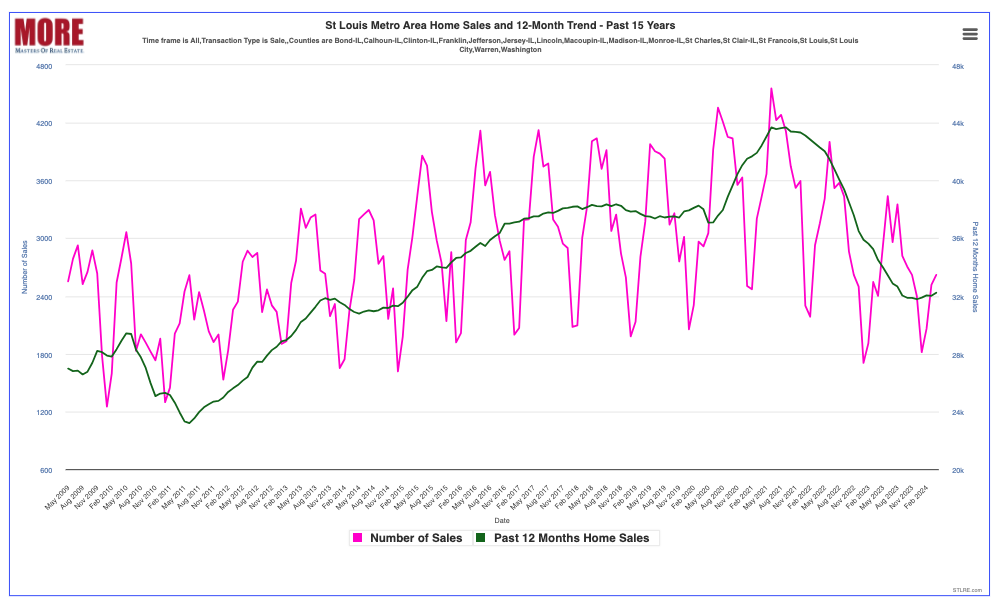
St Louis Metro-Area Home Sales and 12-Month Trend – Past 15 Years
The 12-month home sales trend chart below from MORE, REALTORS® shows a slight upward tick in St. Louis home sales. In April, 32,210 homes were sold during the 12-month period ending in April, marking the highest home sales trend in St. Louis since August 2023. Granted, this is spring—a typically strong selling season for real estate. However, the 12-month sales ending in April 2024 are below the figures from a year ago, which stood at 34,490. Nonetheless, this uptick is a positive sign. It’s also noteworthy that this April marks the first time in three years that the trend has increased from March to April; in both 2022 and 2023, the trend declined during these months.
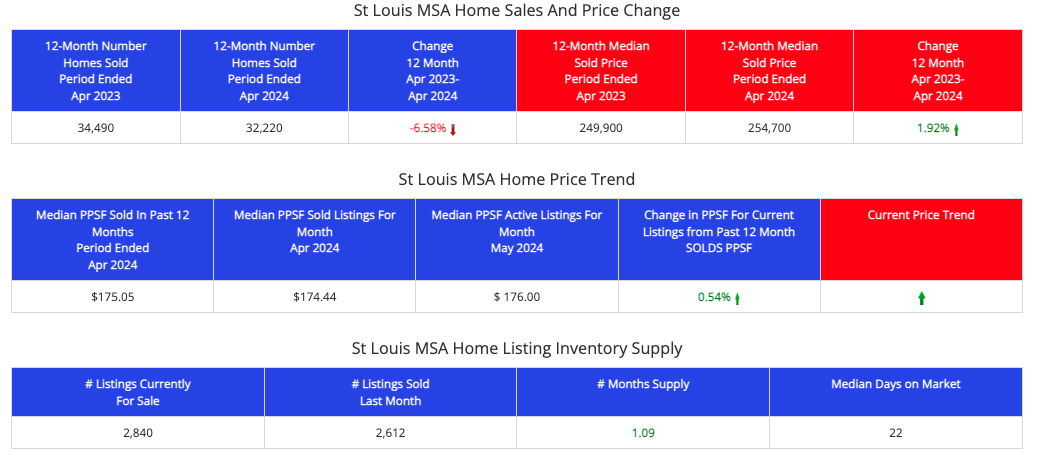
The St. Louis Metropolitan real estate market has experienced notable shifts in its latest 12-month cycle ending April 2024, as compared to the previous year. Firstly, the total number of homes sold in the St. Louis Metro area has seen a decline. Over the past 12 months, ending April 2024, St Louis home sales totaled 32,220 homes, a decrease of 6.58% from the previous year’s 34,490 homes. This reduction in sales volume may reflect a variety of market factors including economic shifts or changes in buyer sentiment.
Conversely, the median sold price for homes has edged upwards, indicating a resilient market valuation. The median sold price for homes in St Louis rose by 1.92% from $249,900 in the prior year to $254,700 in the period ending April 2024. This growth suggests a sustained buyer interest in value, despite the lower sales volume.
Inventory dynamics also present an intriguing picture. The number of listings sold last month was 2,612, with current listings standing at 2,840, and a supply of just over one month (1.09 months). These figures, coupled with a median of 22 days on market, highlight a competitive and swift market environment, challenging both buyers and sellers to act efficiently.
The STL Market Report below, available exclusively from MORE, REALTORS®, has more details on the above information as well as additional useful St Louis market data as well. For prospective buyers, sellers, and investors, understanding these market dynamics is crucial. The expertise of MORE, REALTORS® can provide the necessary guidance and strategic advice to effectively navigate this evolving market landscape.
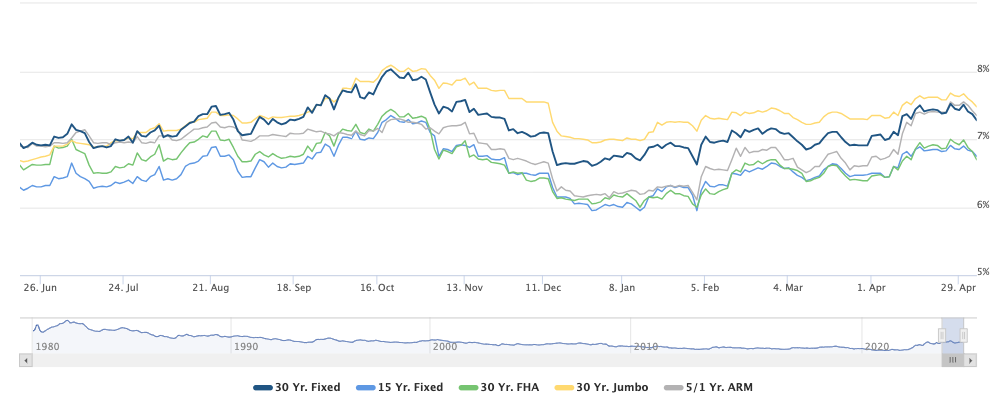
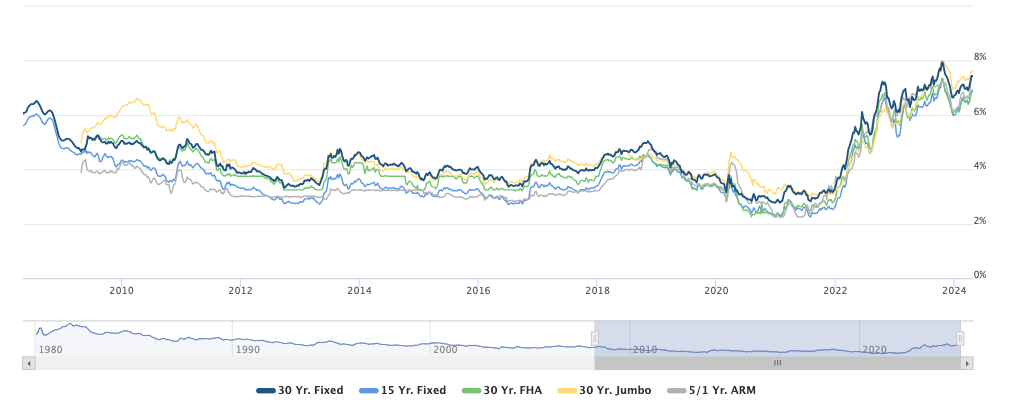
Interest rates for a 30-year fixed-rate conventional mortgage declined to 7.28% today, down from their five-month high of 7.52%, reached just over a week ago. Today’s rate marks the lowest since April 9, when the interest rate on a 30-year fixed-rate mortgage stood at 7.06%.
Although the accompanying chart traces the trajectory of interest rates over the past 40 years, extending back to 1980, it does not predict their future movements. The direction of mortgage rates is influenced by a myriad of factors including, but not limited to, Federal Reserve policies, inflation expectations, and global economic conditions. Currently, experts are closely monitoring the Fed’s monetary policy adjustments in response to inflation rates. Historical data suggests that significant shifts in policy can lead to rapid changes in mortgage rates. Therefore, potential homebuyers and investors should stay informed through reliable financial news sources and consult with seasoned real estate professionals, such as those at my company, MORE, REALTORS®, to navigate the complexities of the mortgage market effectively.
Mortgage Interest Rates – 1980 – Present
(click on chart for entire live, interactive chart)
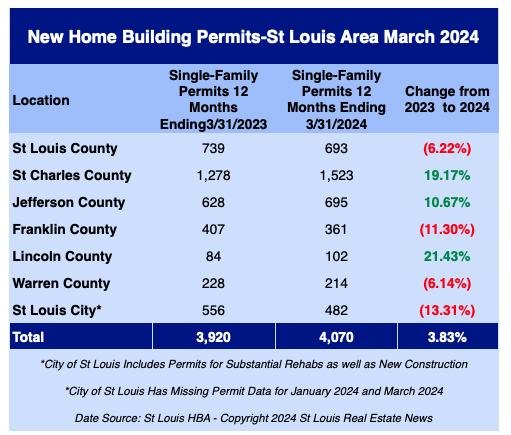
During the 12-month period ending March 31, 2024, a total of 4,070 building permits were issued for new single-family homes in the St. Louis area, marking a 3.83% increase from the previous 12 months, which recorded 3,920 permits. According to the latest data from the Home Builders Association of St. Louis & Eastern Missouri (St. Louis HBA), four of the seven counties covered in the report experienced a decline in permits. The City of St. Louis saw the largest decrease, with a 13.31% drop. Conversely, the three counties that experienced an increase in building permits all reported double-digit growth
St Louis New Home Building Permits – March 2024
(click on table below for page with live charts showing additional permit data)
According to the latest Independent Landlord Rental Performance Report by Chandan Economics, April 2024 witnessed a decline in on-time rental payments in independently operated rental units nationwide, dropping to 85.2%. As illustrated by the chart below, this marks a decrease from 87.0% the prior month and 87.8% a year ago. Western states, notably Utah, Alaska, and Colorado, continue to lead the nation with the highest on-time payment rates. However, it’s worth noting that here in Missouri, only 82% of tenants paid their rent on time in April, resulting in Missouri ranking 43rd in the country for on-time rent payments.
In today’s real estate market, characterized by low inventory and somewhat high interest rates, the idea of buying a home can be daunting for some, especially those who are undecided about their long-term plans. Lease options present a compelling solution, offering flexibility and a strategic stepping stone toward owning a home. This approach is ideal for individuals who are still considering their options in terms of location, saving for a substantial down payment, or waiting for potentially lower interest rates.
A lease option allows tenants to live in a property with the option to purchase it at the end of the lease term at a previously agreed-upon price. This setup is especially beneficial for those who may want to test out a neighborhood before fully committing or for those looking to amass more savings before securing a mortgage.
MORE, REALTORS offers a program that empowers tenants to shop like home buyers from the start, enhancing their flexibility and control over the home-buying process. Designed as a proactive choice, this program enables tenants to make more informed decisions about their future home. It provides an excellent opportunity to transition smoothly from renting to owning, aligning with their financial planning and readiness to commit to homeownership. Find out more at StLouisLeaseOption.com.
Home sellers have reached a momentous $250 million settlement with HomeServices of America and its subsidiaries, including Long & Foster Companies, BHH Affiliates, LLC, and HSF Affiliates, LLC. This settlement, disclosed in a recent press release by the law firm representing the plaintiffs, resolves class action claims as part of a broader dispute over commission costs in the real estate industry.
In a landmark case held on October 31, 2023, a Missouri jury found HomeServices of America, along with the National Association of Realtors (NAR) and Keller Williams, culpable of conspiring to inflate commission fees, resulting in nearly $1.8 billion in damages. While this settlement absolves HomeServices of America from further claims in this specific litigation, it does not extend to Berkshire Hathaway Energy or its affiliates, maintaining their exposure to potential liabilities.
The recent $250 million agreement contributes to a total exceeding $943.25 million in settlements reached in related cases over the past year. Earlier settlements include a $418 million agreement with NAR in March 2024, and others involving major industry players such as Anywhere Real Estate, RE/MAX, Keller Williams, Compass, and Real Brokerage Inc., underscoring a significant reform movement within the real estate brokerage sector.
“These settlements mark a pivotal moment for American home sellers, who have historically been burdened with excessive commission fees,” remarked Benjamin D. Brown, Managing Partner of Cohen Milstein Sellers & Toll. The lawsuit originated from Moehrl, et al. v. National Association of Realtors, which challenged the NAR’s policy requiring home sellers to offer non-negotiable compensation to buyer brokers, significantly affecting the cost transparency and fairness in real estate transactions.
For more detailed information on the implications of these settlements and how they might affect your next real estate decision, consider consulting with a knowledgeable professional at MORE, REALTORS®, whose agents remain at the forefront of industry standards and practices.
Interest rates for a 30-year fixed rate conventional mortgage hit 7.52% yesterday, the highest rate in five months, since November 13, 2023 when they were 7.58%. Today, however, they eased and the 30 year fixed rate mortgage interest rate dropped slightly to 7.45% and the interest rate for a 30-year FHA loan slipped below 7% to 6.95%.
The chart below shows interest rates for over 40 years, back to 1980 and shows about as much change as we’ve seen in fashion and technology during the period — from an astronomical high of 18.29% in October 1981 to an unbelievable low of 2.80% in November 2020. Don’t you wish you had a Time Machine and could travel back 4 years and snag a loan?
Mortgage Interest Rates – 1980 – Present
(click on chart for entire live, interactive chart)
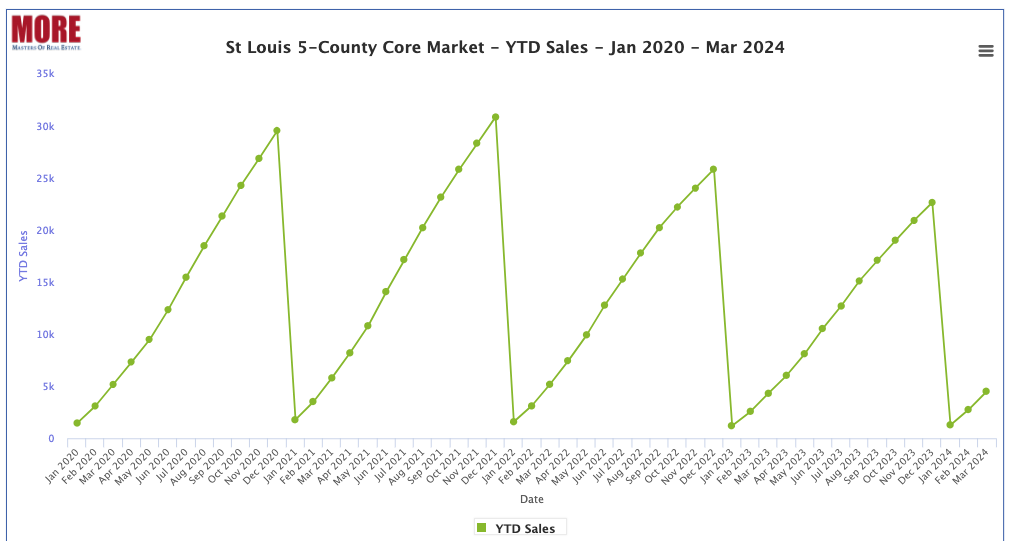
The St. Louis 5-County Core market, encompassing St. Louis City County, St. Louis County, St. Charles County, Franklin County, and Jefferson County, reported a total of 4,518 home sales Year-to-Date through March 2024. This reflects a 4% increase in St. Louis home sales for the same period last year, which had 4,340 home sales. However, as the chart below—available exclusively from MORE, REALTORS®—shows, this represents varied performance compared to earlier years. In March 2022, there were 5,218 sales, a notable peak compared to 5,803 in 2021 and 5,216 in 2020.
This data highlights the fluctuations in the real estate market and is essential for understanding the current trends affecting both buyers and sellers in the region. For those navigating the complexities of real estate transactions, MORE, REALTORS® offers experienced guidance and in-depth market analysis
St Louis 5-County Core Market YTD Home Sales – 2020-2024
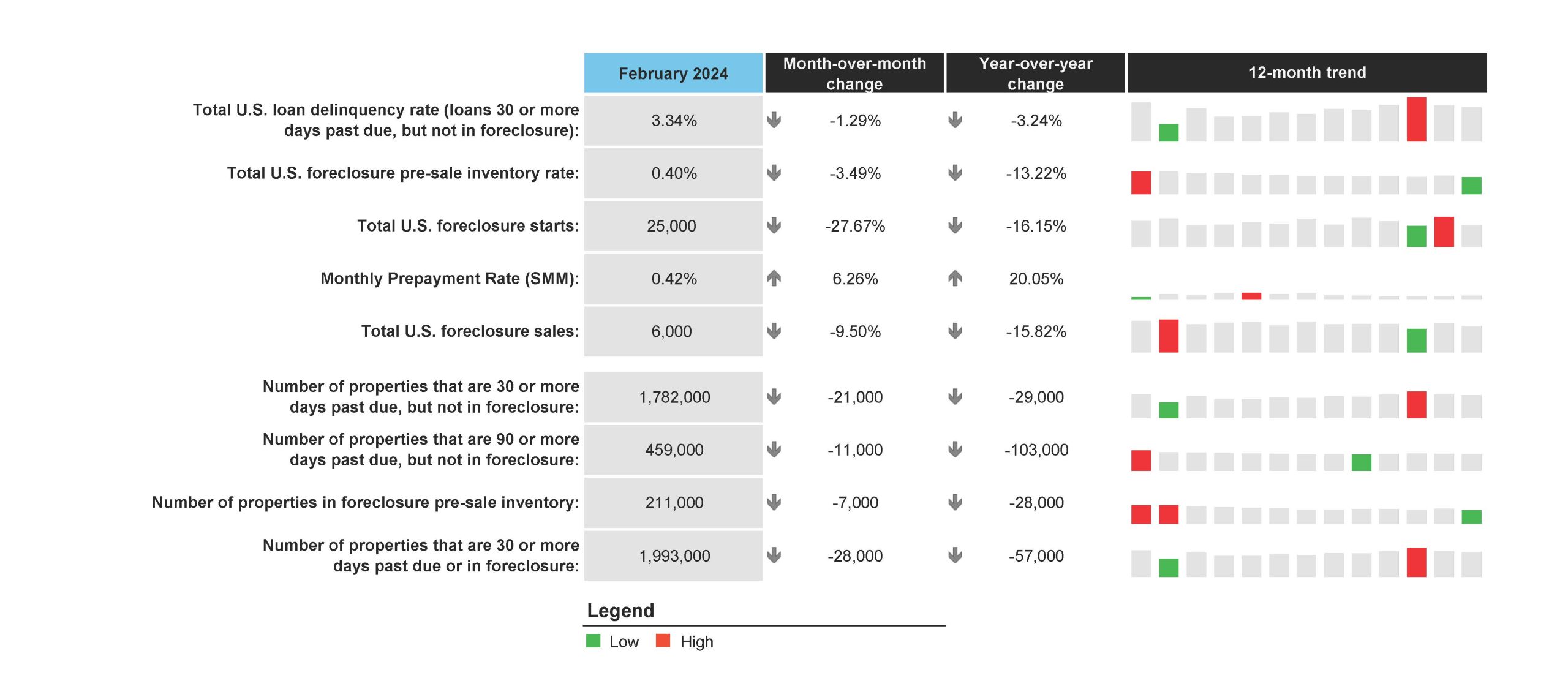
According to the latest report from Intercontinental Exchange, the U.S. mortgage market showed promising signs of stability in March 2024. The national delinquency rate decreased to 3.20%, marking a modest drop from February but remaining slightly higher than the record low observed in March 2023. Notably, serious delinquencies, which track loans 90+ days past due but not in active foreclosure, decreased significantly. These serious delinquencies fell by 24,000 cases—a 5.2% reduction from February, reaching their lowest level since mid-2006. This improvement is particularly significant as it occurred during a month that historically sees fluctuations due to its conclusion on a Sunday, a pattern observed only thrice in the last two decades.
In addition to a decrease in serious delinquencies, March saw a downturn in the number of loans in active foreclosure, dropping to 205,000—the fewest since January 2022 and 28% below pre-pandemic levels. Moreover, prepayment activity, often a sign of a healthy housing market, reached its highest point in seven months, encouraged by lower interest rates and the onset of the spring homebuying season. The attached chart below this article provides a visual depiction of these positive trends in delinquency and foreclosure data.
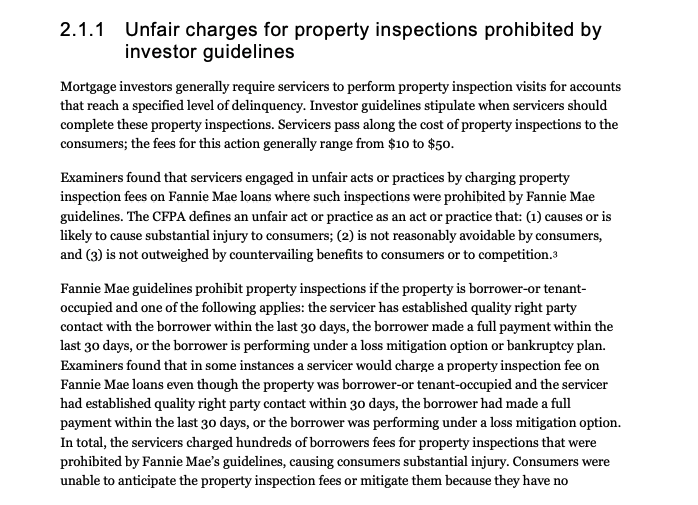
The Consumer Financial Protection Bureau’s (CFPB) Spring 2024 report on mortgage servicing reveals critical issues that prospective and current homeowners should be aware of. The report highlights a troubling trend of unauthorized charges and deceptive practices in mortgage servicing, which could impact a homeowner’s financial stability and property rights. For instance, some services were found to be charging illegal property inspection fees, particularly on Fannie Mae loans, despite guidelines clearly prohibiting such fees when certain conditions are met. These unjust fees, ranging from $10 to $50, were imposed even when borrowers were actively engaging with their servicers, highlighting a significant breach of trust and a potential drain on homeowner resources .
Moreover, the report exposes servicers for levying unauthorized late fees, violating both consumer trust and regulatory requirements. These overcharges, which occurred due to flawed administrative processes or oversight, are especially egregious as they can unfairly increase the financial burden on homeowners. The CFPB’s commitment to scrutinizing such practices is a reminder of the need for vigilance among consumers. The report’s findings underscore the importance of homeowners staying informed and proactive in managing their mortgage accounts to avoid falling victim to these predatory practices. For a deeper understanding and additional details, consider reviewing the complete report below .
CFPB Supervisory Highlights – Mortgage Servicing Edition – Spring 2024
In a significant development in the class-action lawsuit against the National Association of Realtors (NAR) and several major real estate entities, the U.S. District Court for the Western District of Missouri has granted preliminary approval for a proposed settlement. This lawsuit, led by plaintiffs Rhonda Burnett, Jerod Breit, Jeremy Keel, Hollee Ellis, and Frances Harvey, represents a class of U.S. homeowners who paid commissions to brokers upon the sale of their homes through multiple listing services during specific periods spanning from 2014 to the present. The court’s decision, as detailed in the document “Sitzer v NAR – Motion for Preliminary Approval of Proposed Settlement – Order Granted,” acknowledges the fairness, reasonableness, and adequacy of the settlement, setting the stage for final approval pending further review and a hearing scheduled for November 2024.
The complete details can be found in the courts order below.
The St. Louis Business Journal today published an article with the headline “A hidden cost of homeownership is mounting — and approaching crisis levels”. The article began with “homeowners across the country are facing an insurance crisis — and it’s driving up housing costs”, and then quoted a study indicating that 72% of U.S. homeowners said the cost of their homeowners insurance had increased over the past year. Well, sometimes it’s better to not have ocean views, mountains, and the like, and to be situated in the middle of the country like we are here in St. Louis—and this would be one of those occasions.
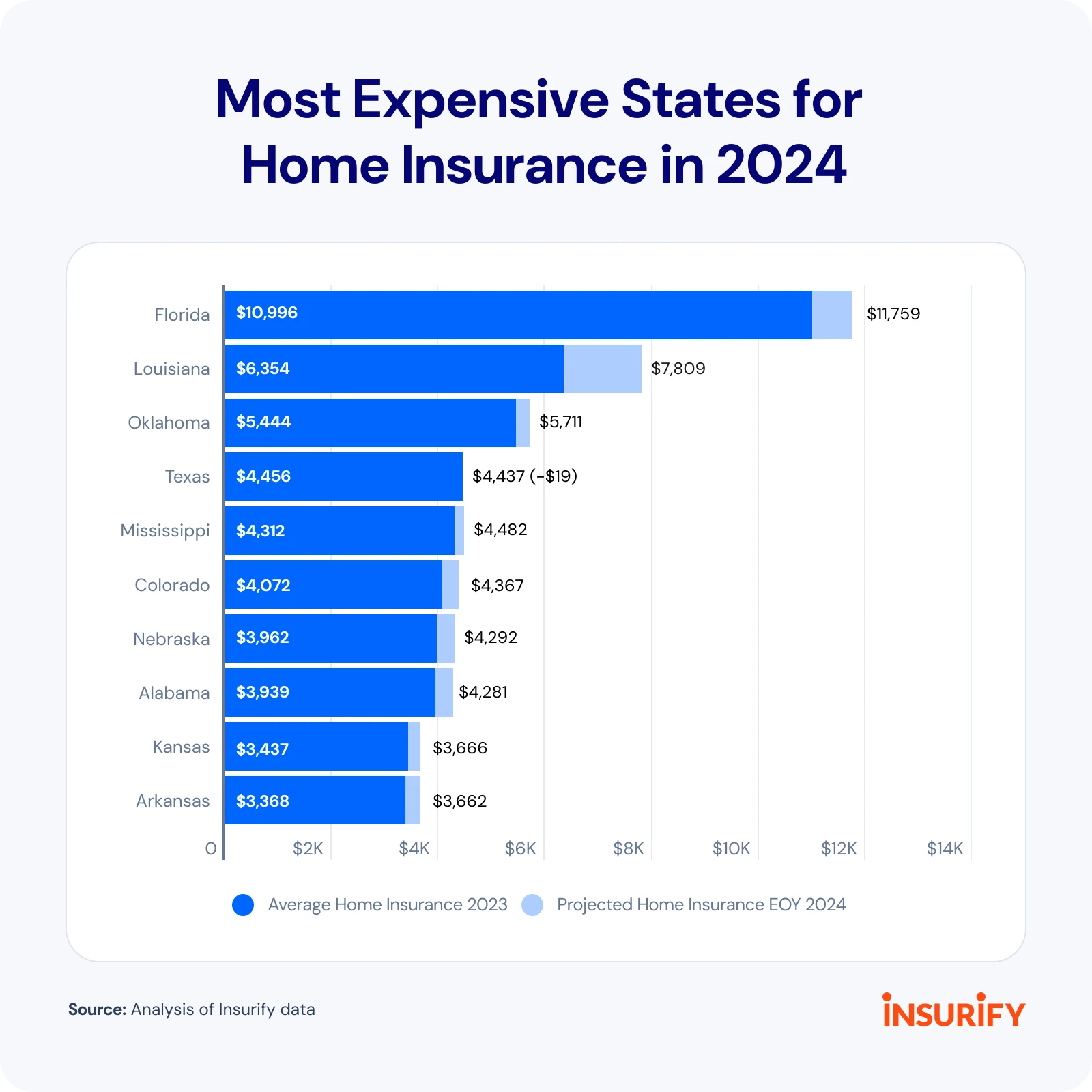
Homeowners Insurance Not Projected to Increase in Cost in 2024:
According to a study by Insurify, home insurance rates are expected to rise by 6% this year after a 20% increase over the last two years. However, the study indicates that in Missouri, the average cost of homeowners insurance in 2023 was $2,706 and for 2024 it’s projected to be $2,697. So, no increase in Missouri and actually a few bucks in savings.
Within Missouri, the cost of insurance varies by location. Here are a few examples of the average monthly quote for homeowners insurance for several cities within Missouri:
Florissant – $206
St. Charles – $186
St. Joseph – $213
St. Louis City – $232
Springfield – $224
There are many factors that come into play regarding the cost of insurance beyond the location, such as the home’s replacement cost. This figure represents the cost to rebuild your home using similar materials and is influenced by several factors, including the age of your home, its square footage, architectural style, and the local rebuilding costs in your area. Coverage options also play a vital role. Homeowners who opt for additional coverages, such as protection for sewer lines, natural disasters, and high-value possessions, will generally see an increase in their insurance rates.
This is why it’s important to have a knowledgeable insurance agent and preferably one with access to coverage from many different companies to help you select the right company and coverage for your situation. A good place to start is STLBestInsuranceAgent.com, where you can find many helpful short videos about homeowners insurance, particularly from the standpoint of a homebuyer.
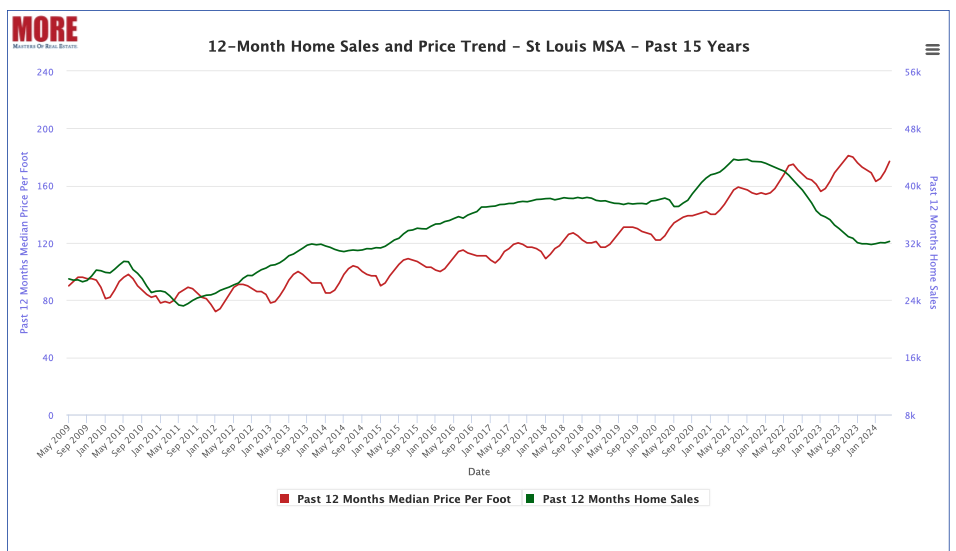
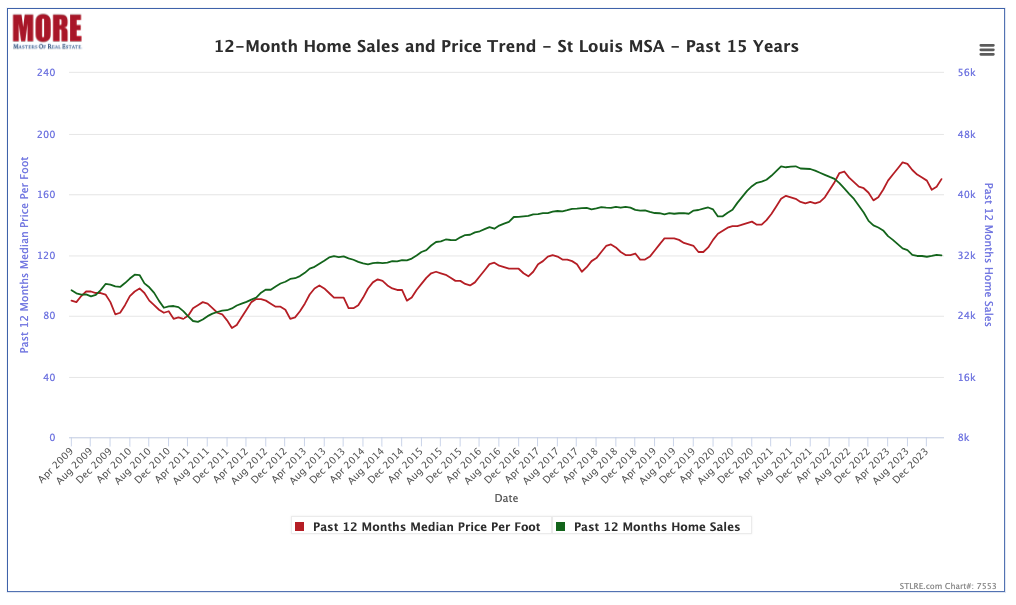
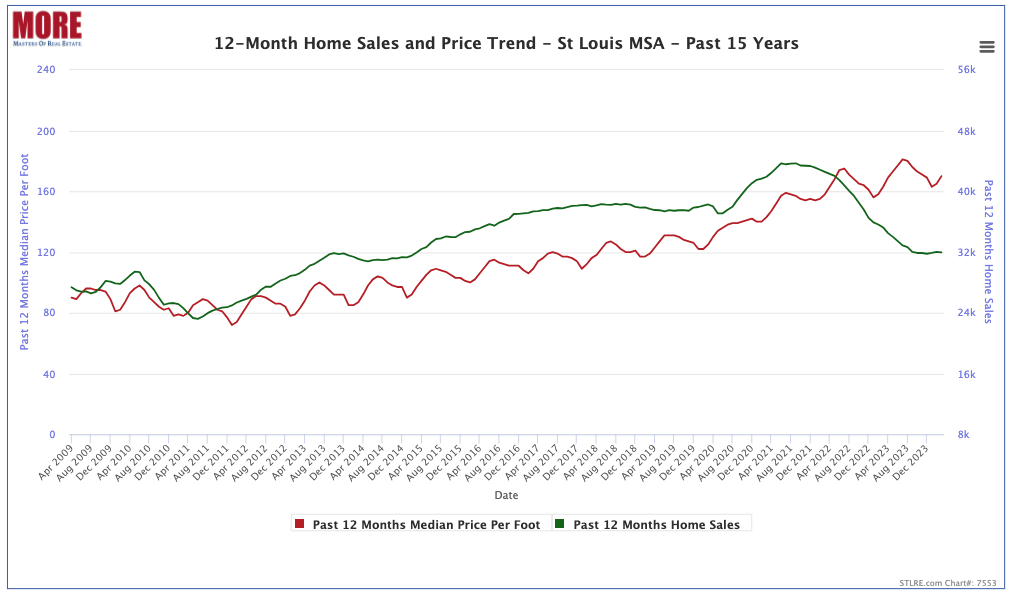
The St. Louis metro area’s real estate market has demonstrated significant fluctuations in home sales over the past fifteen years, revealing interesting trends for both homebuyers and sellers. Analysis of the 12-month home sales data chart, exclusively available from MORE, REALTORS®, illustrates a series of peaks and troughs that correspond closely with various economic factors impacting the region. St Louis home sales fell to the lowest point during the 15-year period in June 2011 when the 12-month period had 23,194 sales. Since hitting that low home sales have steadily increased until the 12-month trend hit 43,689 sales for the period ended September 2021. Since hitting that high, the sales trend has steadily decreased, while interest rates have increased at the same time, and appears to have stabilized around the 32,000 homes mark or at least has stayed at the level for the past 8 months. The median price of homes sold during the same period went from $97 per foot when sales hit their low in June 2011 to $170 per foot in March 2024 reflecting an annual rate of increase of 6.43%.
12-Month Home Sales and Price Trend – Past 15 Years
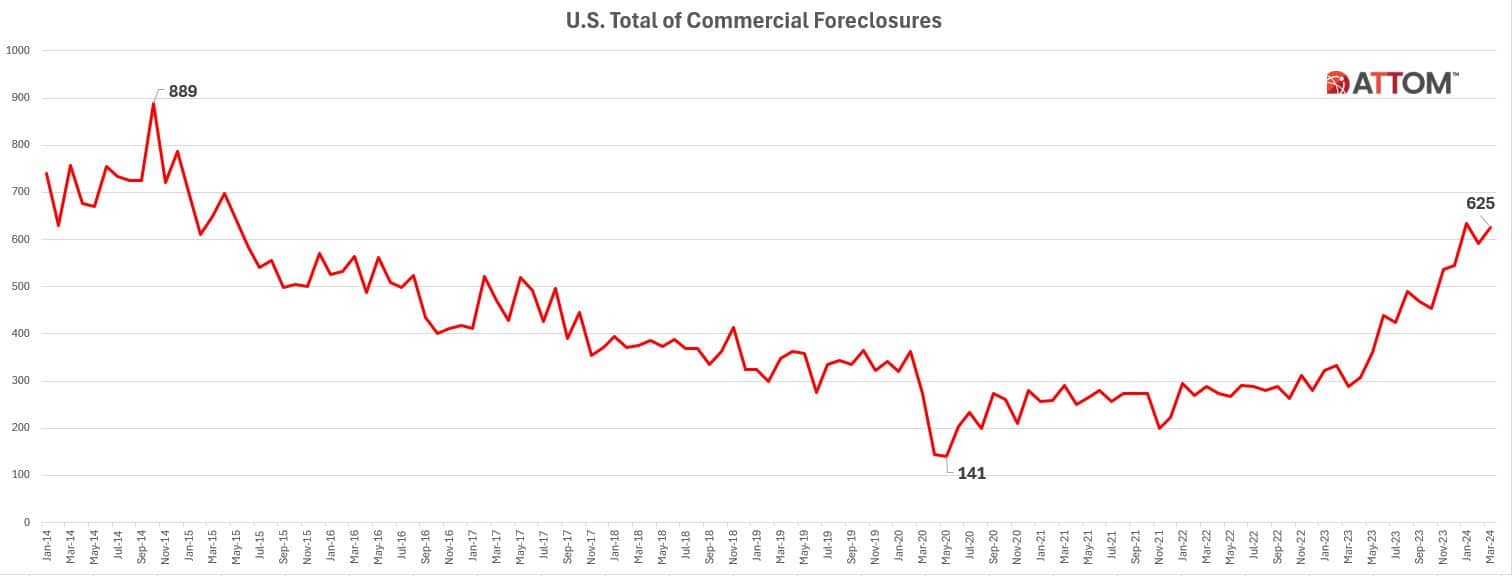
Based on the data from the recent ATTOM report on U.S. commercial foreclosures, there is a noticeable trend that highlights the challenges and changes in the commercial real estate market over the past decade. The report indicates a significant increase in commercial foreclosures, rising to 625 in March 2024 from a low of 141 in May 2020—a time characterized by pandemic-induced economic shocks and responsive fiscal interventions. This sharp rise represents a 117% year-over-year increase and underscores a broader economic narrative where, despite short-term stabilizations, long-term market corrections have been a constant presence.
States like California, New York, and Florida have borne the brunt of these fluctuations. For instance, California experienced a dramatic 405% increase from last year, showcasing how regional factors and state-specific economic conditions have influenced foreclosure rates. This analysis not only offers insights into the challenges faced by the commercial real estate market but also highlights the sector’s resilience and capacity to navigate through a continuum of economic cycles.
The recent spike in commercial foreclosures has raised questions about the interconnectedness of the commercial and residential real estate markets. Historically, these two sectors have shown some level of correlation, as economic factors affecting businesses often spill over into the residential sphere. For instance, a downturn in commercial real estate can lead to job losses and reduced consumer spending, which in turn can soften the residential market. However, the current trends suggest a more complex relationship, with the residential market remaining relatively stable despite significant upheavals in commercial real estate. In the coming months we’ll see if that trend continues.
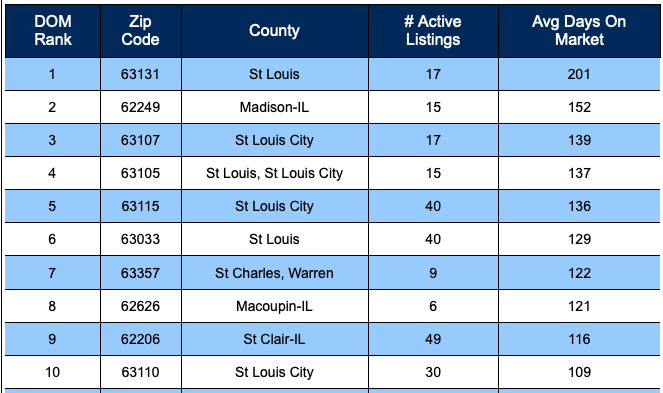
The St. Louis Metro area (MSA), which spans parts of Missouri and Illinois, has a diverse real estate market with some zip codes seeing properties sell slower than others in spite of the low-inventory market we are in. Based upon the report below, available exclusively from MORE, REALTORS®, the slowest selling zip code in the St Louis metro area is 63131 in St Louis County, Missouri where the current average days on market for active listings is a whopping 201 days. Next is 62249 in Madison County Illinois with an average of 152 days on the market.Notably, 8 of the top 10 slowest-selling zips are located in Missouri and 4 of those within the city of St Louis.
Slowest Selling Zip Codes in St Louis
(click on table for complete list with current data)
Since the National Association of Realtors (NAR) and the plaintiffs in the following lawsuits—Christopher Moehrl v. The National Association of Realtors et al., Rhonda Burnett (originally Sitzer) v. The National Association of Realtors et al., Dawin Niel Umpa v. The National Association of Realtors, et al., and Don Gibson v. The National Association of Realtors—reached a settlement agreement on March 15, 2024, which is still pending court approval and thus preliminary at this point, the topic has dominated industry conversations. The focus of these lawsuits on buyer’s agent commissions has attracted more media attention since mid-March than it seems to have received in the over 40 years I’ve been in the business before that. Don’t get me wrong, I’m not saying all this attention is bad. In fact, I believe it is beneficial. I’ve long advocated for educating consumers, feeling that the more home buyers and sellers know, the better decisions they can make. This is why I’m rapidly approaching the milestone of 3,000 articles on the topic of real estate in St. Louis on this site.
Now, I don’t do this solely for altruistic reasons; sharing the information and knowledge I’ve gained either through experience or research is also self-serving. As a broker-owner of MORE, REALTORS®, I’ve put forth just as much effort in sharing knowledge with our agents, and I am blessed to be surrounded by real estate professionals who are as eager as I am to increase their knowledge and hone their skills to better serve clients. Here’s the reward for me: informed and knowledgeable consumers seek out better and more professional agents, like the ones we’re in business with, creating a win-win situation.
Having said all that, while the attention from the media is beneficial, unfortunately, there is a lot of incorrect information out there and assertions being made that don’t seem to be based on facts, but rather on opinion. Oh yes, I have opinions too, plenty of them, many of which are shared on this site, but to the extent possible, I try to base them on facts and include the sources of my opinions.
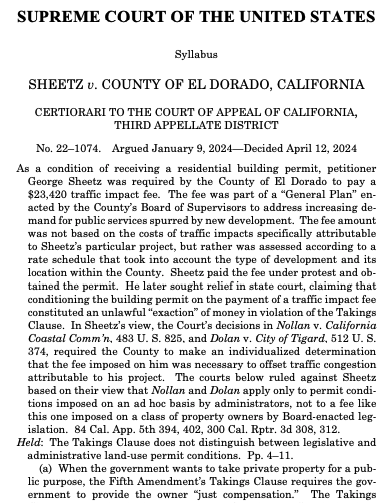
The Supreme Court has rendered a unanimous decision in the landmark case SHEETZ v. COUNTY OF EL DORADO, involving petitioner George Sheetz and the imposition of a traffic impact fee by El Dorado County, California. The key points of the decision are as follows:
Background: George Sheetz was mandated to pay a $23,420 traffic impact fee as a condition for obtaining a residential building permit, which he contested as an unlawful exaction under the Takings Clause.
Court’s Decision: The Supreme Court, in an opinion delivered by Justice Barrett, vacated the ruling of the California Court of Appeal. The decision clarified that the Takings Clause does not differentiate between legislative and administrative land-use permit conditions, reinforcing property rights protections against arbitrary government exactions.
Legal Principles Invoked: The Court applied the tests from Nollan v. California Coastal Comm’n and Dolan v. City of Tigard, emphasizing that permit conditions must both have an “essential nexus” to the government’s land-use interest and be “roughly proportional” to the impacts of the proposed development.
Impact and Precedent: The ruling underscores the necessity for governmental authorities, whether legislative or administrative, to adhere strictly to constitutional principles when imposing conditions on building permits. This decision is a significant affirmation of property rights, setting a precedent that both legislative and administrative exactions are subject to the same constitutional scrutiny.
This decision marks a critical juncture in property law, reaffirming the Supreme Court’s commitment to protecting individual property rights against overreach by local governments.
Supreme Court Decision: SHEETZ v. COUNTY OF EL DORADO
As of 2023, according to data from the Missouri Department of Elementary and Secondary Education and the Illinois State Board of Education, there are roughly 135-145 school districts within the 17 counties of the St. Louis Metropolitan Statistical Area (MSA). This figure includes public school districts but excludes private and charter schools. These districts vary significantly in size, home prices, and demand for homes. While strong school districts and top-rated schools are major attractions for home buyers and may reflect in the prices homes fetch compared to those in lesser districts, they do not guarantee quick sales. However, it is logical to assume that the quality of schools can significantly influence demand in various subdivisions.
What are the fastest-selling school districts in the St. Louis metro area currently?
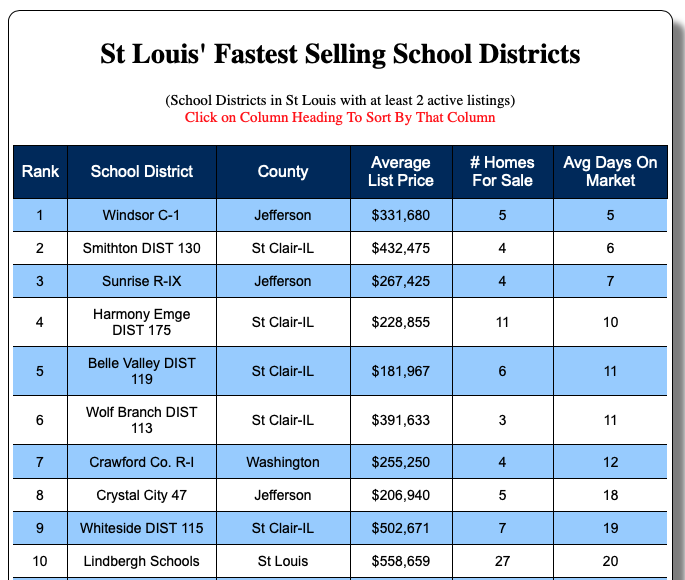
As of today, the list below, available exclusively from MORE, REALTORS®, indicates that the Windsor C-1 School District in Jefferson County is the fastest-selling, with homes staying on the market for an average of just 5 days. It is followed by Smithton DIST 130 in Illinois, with an average of 6 days on the market, and Sunrise R-IX in Jefferson County, taking third place with 7 days. St. Clair County in Illinois claims five of the top ten spots for the fastest-selling school districts, followed by Jefferson County with three. It should be noted that smaller school districts, with fewer homes on the market, may have an advantage over larger districts with more extensive inventory.
Top 10 Fastest Selling School Districts in the St Louis Metro Area
There were 31,960 homes sold in the St. Louis metro area during the 12-month period ending March 31, 2024, as the chart below from MORE, REALTORS® exclusively illustrates. This represents a 25% decline from the number of sales for the same period a year ago. While this is a slight increase from the 12-month sales low of 31,775 homes for the period ending December 31, 2023, it’s the lowest sales volume for this period since March 2015. Based on the chart, it appears that the trend of declining home sales has ended, as it has remained fairly flat over the last 8 months.
During the most recent 12-month period, homes in the St. Louis metro area sold for a median price of $170 per foot, marking an increase of about 7.5% from the same period a year ago.
St Louis MSA 12-Month Home Sales and Price Trend – Past 15 Years (Chart)
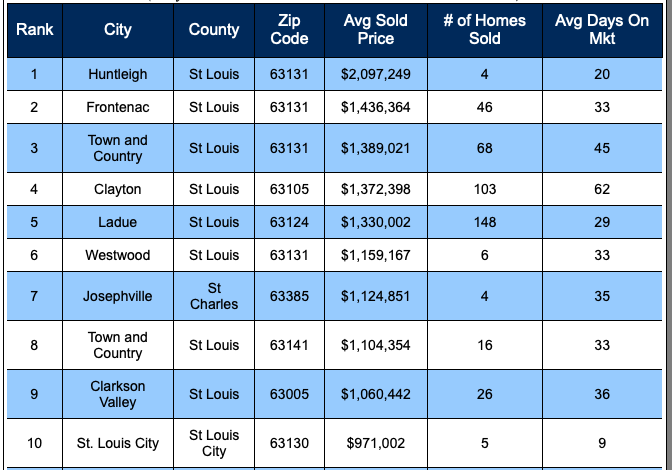
The real estate market in St. Louis is notably diverse, featuring homes that are, on average, quite affordable. However, this affordability doesn’t preclude the existence of luxury markets within the city. Presented below is an exclusive list from MORE, REALTORS® detailing the top 10 cities in the St. Louis MSA where homes command the highest average selling prices.
Key takeaways from this list include:
Huntleigh dominates with the highest average sale price of $2,097,249 and impressively quick transactions, with homes spending an average of just 20 days on the market. It’s important to note that these figures are based on a limited sample of only four home sales.
Frontenac and Town and Country are not far behind, boasting substantial average prices of $1,436,364 and $1,389,021, respectively. The volume of sales in these areas—46 and 68 homes sold—points to a healthy and active market.
Clayton and Ladue marry luxury with lively market activity, seeing 103 and 148 homes sold at steep average prices of $1,372,398 and $1,330,002, respectively.
Additional cities such as Westwood, Josephville, Town and Country, and Clarkson Valley also feature on the list, each contributing unique market traits but collectively underscoring the strong demand for high-end residential properties in the area.
St Louis MSA’s Most Expensive Cities-Avg Price-Homes Sold In Past Year
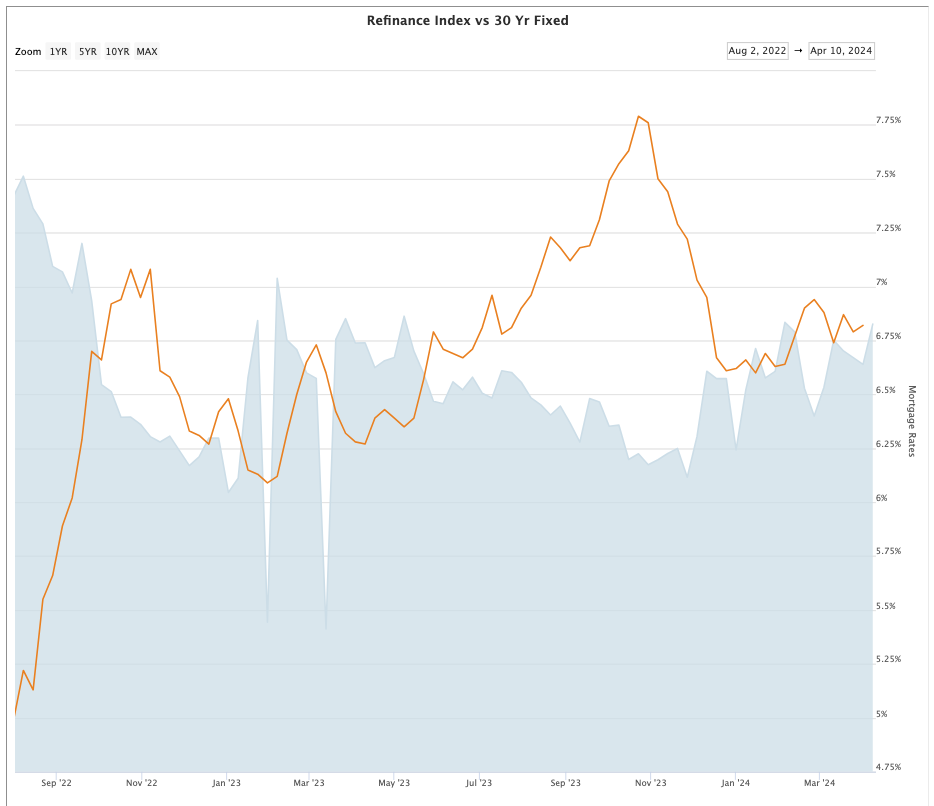
Last week, the interest rates for 30-year fixed-rate mortgages climbed past the 7 percent mark. Despite this increase, as the chart below illustrates, there was a significant 10 percent increase in refinancing applications. This is in sharp contrast to a 5 percent decline in purchase applications. The growth in the refinancing segment is notable, representing 33.3 percent of the total application volume, up from 30.3 percent the previous week. This surge in refinancing interest is particularly intriguing, given the highest reported 30-year mortgage rates in over a month, at 7.01 percent.
Joel Kan, MBA’s Vice President and Deputy Chief Economist, attributed the rising rates to the Federal Reserve’s cautious stance on adjusting policy amidst persistent inflation and resilient economic indicators, including strong employment data. Despite the unfavorable rate environment, the demand for refinancing, especially VA refinancing, remained robust.
Other notable trends include a decrease in average loan sizes, with purchase loan sizes—often viewed as a proxy for home prices—dropping to $449,400 from $453,000. Additionally, there was a shift in the composition of mortgage applications, with increases in FHA and VA loan shares.
So, what explains the rising number of homeowners refinancing their mortgages even with rising mortgage interest rates? There are numerous reports indicating that many homeowners across the country are becoming cash-strapped and having a difficult time paying bills, thus resorting to pulling out equity from their homes, even if it means accepting a higher interest rate. I’ve also observed reports indicating that consumer credit card debt is at historically high levels, with interest rates on this debt being astronomical. This situation is prompting people to refinance their home loans again, even at higher rates, because even though their mortgage may be at a higher rate, it still appears to be a bargain compared to the 27 or 28% on a credit card. I haven’t seen enough verifiable data to confirm if either of these situations is true, but both are plausible.
The ebb and flow of St. Louis’s real estate market are linked to the broader economic currents, and recent weeks have witnessed a significant uptick in mortgage interest rates. In the video below, Traci Everman, Senior Mortgage Banker with Flat Branch Home Loans, does a fantastic job of explaining what is happening and why. Below the video are some highlights and a recap.
Here are are few highlights of what Traci’s covers in the video:
Recent Economic Impacts on Mortgage Rates:
Economic reports released over the past day have precipitated a downturn in the bond market and a subsequent rise in interest rates. This movement stems from inflationary pressures, which erode the value of long-term investments like mortgage-backed securities.
Analyzing PCE Inflation and Jobs Reports:
Key economic indicators such as the PCE report, which reflects inflation sans food and energy costs, revealed a 0.3% increase, signaling a direction contrary to the market’s desires. Furthermore, the employment data, despite being a bearer of good tidings on job creations, did not spell out positive news for the bond market.
Current State of Mortgage-Backed Securities:
Currently, the mortgage-backed securities market is taking a hit, down 88 basis points, leading to a predicted quarter percent increase in interest rates between yesterday and today. This fluctuation reminds us of the volatility that peaked in October 2023.
How Recent Trends May Affect Future Rates:
The Federal Reserve’s stance and upcoming meetings are pivotal. While rate cuts were anticipated, the outcome was status quo, leaving predictions for future rate cuts in 2024 uncertain. Inflation, driven by rising oil prices and other factors such as soaring auto insurance premiums, continues to play a crucial role.
Conclusion: Staying Informed on Market Changes:
As Traci Everman sums up the market update, it’s clear that keeping a close eye on inflation and Fed decisions is crucial for anyone involved in real estate. With potential rate cuts on the horizon, the coming quarters could be crucial for buyers and sellers in St. Louis.
For a more detailed dive into what this means for your home buying or selling decisions, stay connected with St. Louis Real Estate News. Stay informed.
Missouri Online Real Estate, Inc. 3636 South Geyer Road - Suite 100, St Louis, MO 63127 314-414-6000 - Licensed Real Estate Broker in Missouri
The owner and authors this site are providing the information on this web site for general informational purposes only and make no representations, warranties (expressed or implied) or guarantees of any kind whatsoever, as to the accuracy or completeness of any information on this site or of any information found by following any link on this site. Furthermore, the owner and authors of this site will not be liable in any manner whatsoever for any errors or omissions in information on this site, nor for the availability of this information. Additionally the owner and authors of this site will not be liable for for any losses, injuries or damages in any way from the display or use of this information or as the result of following external links displayed on this site, or by responding to advertisements displayed, or contained, on this site
In using this site, users acknowledge and agree that the information on this site does not constitute the provision of legal advice, tax advice, accounting services, investment advice, or professional consulting of any kind nor should it be construed as such. The information provided herein should not be used as a substitute for consultation with professional tax, accounting, legal, or other competent advisers. Before making any decision or taking any action on this information, you should consult a qualified professional adviser to whom you have provided all of the facts applicable to your particular situation or question. None of the tax information on this web site is intended to be used nor can it be used by any taxpayer, for the purpose of avoiding penalties that may be imposed on the taxpayer.
All of the information on this site is provided as is, with no assurance or guarantee of completeness, accuracy, or timeliness of the information, and without warranty of any kind, express or implied, including but not limited to warranties of performance, merchantability, and fitness for a particular purpose.
This site contains external links to other sites not owned or controlled by the owner of this site, therefore the owner of this site does not control or guarantee in any manner the accuracy or relevancy of any information obtained through following such links. Links contained on this site are for users convenience and users should exercise extreme caution when following links. Including a link on this site does not constitute an endorsement of the site linked to or any views or opinions expressed on the site, products or services offered on outside sites or the companies or organizations that own and operate outside sites.
This site may accept payment for advertising, for displaying advertisements, through affiliate relationships with companies or may receive referral fees or commissions from companies as a result of recommending or referring people to a website. This site may also accept free product samples, free services, gift cards or cash to review a product or service. All paid and sponsored content may not always be identified as such. Any product claim, quote or other representation about a product or service should be verified with the manufacturer or provider.